THE EDITORIAL INTRODUCTION
Athlete testing equipment ranges from simple timing tools to instrumented platforms and laboratory systems. The important question is not which device has the longest feature list. It is what a test needs to measure, how repeatable the result must be, where the test will happen and who will operate the equipment.
Force, jumping and balance
Force plates measure forces applied through a platform over time. They can support tasks such as jump assessments or selected movement analyses. Jump systems may use a force plate, contact mat or another measurement approach; the resulting variables depend on how the system detects and calculates the task. A jump result describes that protocol. It does not independently identify every contributor to the performance.
Balance and stability platforms record aspects of how pressure or movement shifts while a person stands or completes a task. Such signals can be useful in structured assessments, but they should not be treated as a standalone diagnosis. Test instructions, footwear, surface, familiarization and participant attention can influence repeatability.
Timing, strength and wearable sensors
Timing gates record when a participant passes defined points. They can help measure sprint splits or task time, provided gate placement, start procedure and approach are consistent. Timing systems do not explain the movement strategy that produced a time. Small changes in setup can alter what interval is being recorded.
Dynamometers measure force or torque under specified conditions. Isokinetic equipment controls movement speed while recording resistance, which can support carefully standardized strength testing. Results depend on setup, range, positioning, instructions, calibration and participant effort. They are not medical diagnoses and should be interpreted by qualified professionals within an appropriate context.
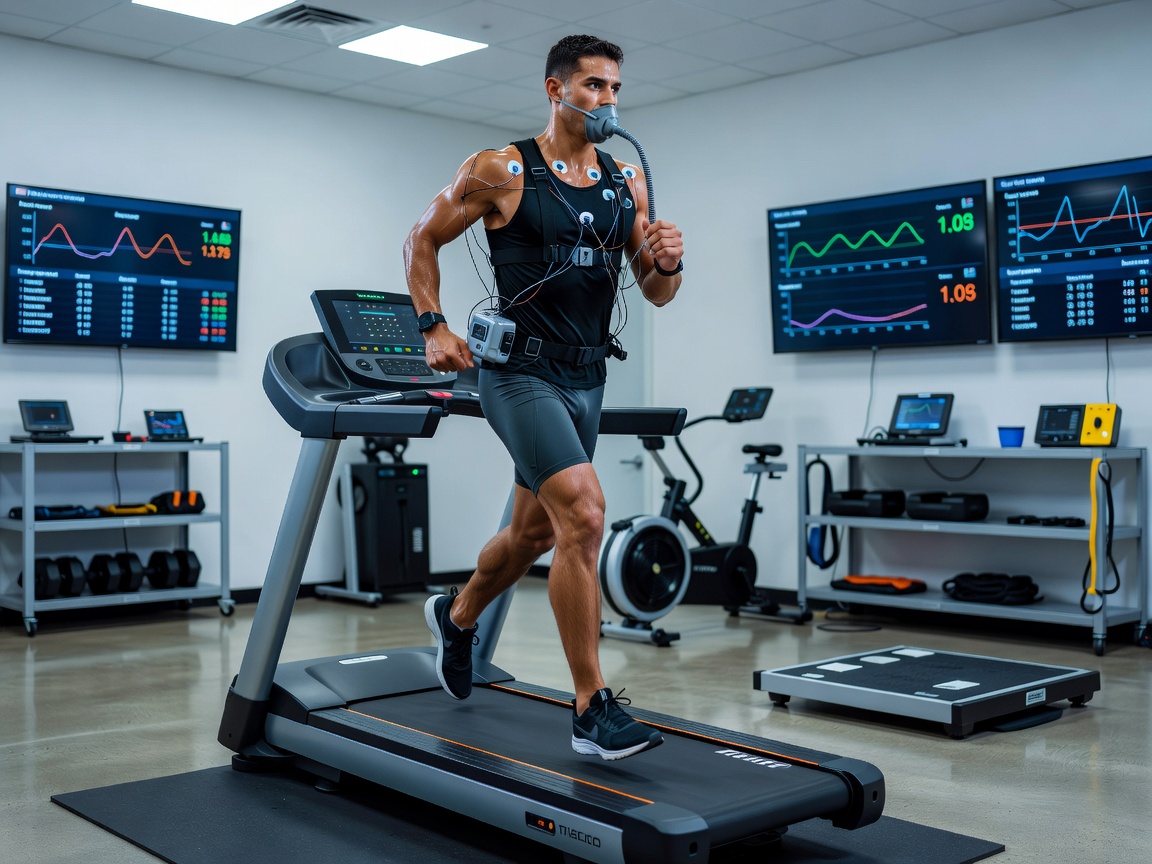
Wearable motion sensors can record acceleration, rotation or related signals during training and field activity. Their portability can be helpful, but attachment location, orientation, sampling and data processing affect what the signal represents. Heart-rate monitors estimate cardiovascular response using their particular sensing method; they do not directly measure every component of exercise intensity or recovery.
Software, calibration and repeatability
Measurement software can organize trials, process signals and present summaries. A polished dashboard does not remove the need to understand definitions, exclusions and processing choices. Teams should check calibration according to the equipment’s documented procedures, maintain devices, record version and setup details, and define how missing or unusual trials are handled.
Repeatability means a test produces reasonably consistent results when the relevant conditions are repeated. It depends on the participant as well as the instrument: familiarization, fatigue, warm-up, motivation, instructions, surface and timing all matter. Before comparing sessions, ask whether the protocol has been held sufficiently consistent and whether the observed difference is larger than ordinary variation.
Choosing a setup
For a controlled research question, a fixed system may offer useful detail but require a dedicated space and trained operators. A portable tool can be easier to take to training, although portability may come with trade-offs in environmental control or data detail. Equipment used for coaching and routine monitoring may have different priorities from equipment used in a formal research protocol.
Budget is not just the purchase price. Total effort may include installation, space, maintenance, calibration, software, training, data storage and staff time. These categories vary widely, so it is better to compare intended use and ongoing requirements than to rely on a generic cost label. Operator expertise matters: a complex instrument used inconsistently can produce less useful information than a simpler, well-run assessment.
What equipment cannot do alone
No single instrument captures every aspect of performance. A force plate records force at its interface, not a complete account of internal tissue loading. A timing gate records a time between its positions, not the reason for that time. A wearable sensor records signals that require processing and interpretation. Combining measurements can enrich an answer, but it also adds setup and analytical complexity.
Good for
Testing equipment helps standardize observations, quantify selected features of a task and support informed discussion when protocols are suitable and repeatable.
What to know
- Match intended use, portability and data needs before selecting a tool.
- Calibration and maintenance should be documented.
- Understand the test definition behind a device’s output.
- Measurements are not diagnoses or guarantees of future performance.
- Qualified supervision is important for demanding assessments.