THE EDITORIAL INTRODUCTION
A sports biomechanics laboratory studies how bodies move and interact with their surroundings. The central idea is straightforward: describe movement, measure selected physical signals, and examine how those observations relate to a task. The practice is less about finding a single perfect number and more about combining tools in a way that makes sense for the question.
What does biomechanics measure?
Biomechanics applies mechanical ideas to living movement. Researchers may describe joint motion, the path of a body segment, contact time, or the forces exchanged between a person and a surface. A body segment is a simplified model of a body part—such as the thigh or lower leg—used to make movement easier to analyse. It is a useful model, not a literal description of every tissue and joint.
In running and jumping studies, force platforms can record the force applied to a surface over time. The opposing force from the surface is commonly called the ground reaction force. A force plate can help answer questions about how force changes during contact, but it cannot independently reveal why a person moved that way or what every muscle and joint experienced.
Cameras, plates and practical setup
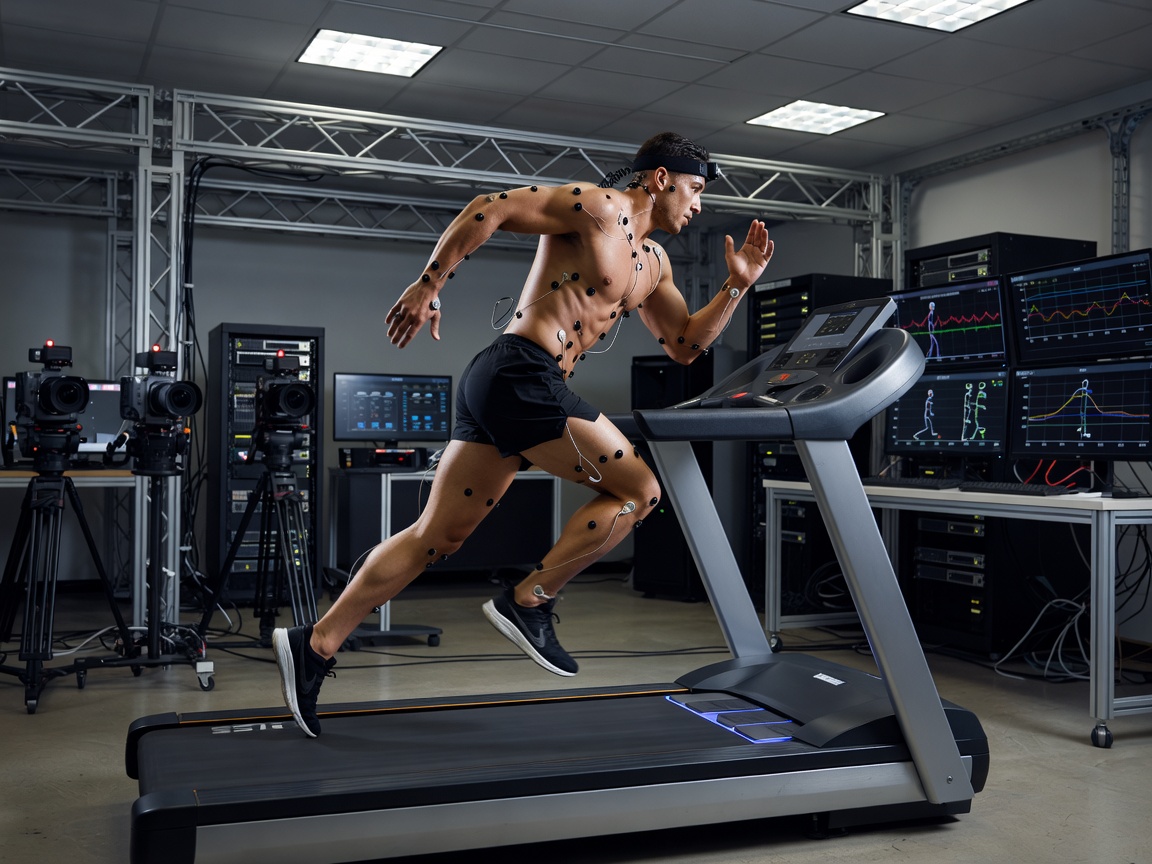
Optical motion-capture systems use cameras to track markers attached to the body. With calibration and processing, the marker paths can be used to estimate segment movement and joint motion. The approach can provide a detailed view in a controlled space, but it needs careful setup, unobstructed camera views and time for processing. Small marker shifts, clothing movement and assumptions in the model can affect the result.
Wearable sensors offer a different trade-off. Inertial measurement units, often worn on the body, estimate movement from combinations of acceleration and rotation. They can be more portable and may suit field settings, although placement, drift, sensor alignment and task-specific validation matter. Optical and wearable approaches are not universal rivals: the better fit depends on the task and the information needed.
Laboratory layout should follow the protocol. A running lane, jump area or walkway needs safe space, clear lines of sight and enough room for repeatable trials. Equipment selection follows the research question. If the question concerns surface force, a force plate may be relevant; if it concerns movement timing across a larger area, other tools may matter more. Adding instruments simply because they are available can make a test harder to run without making its answer better.
From a test to an interpretation
Testing protocols define how a task is performed: instructions, warm-up, trial count, rest, footwear and the order of conditions all influence consistency. A high-level protocol should be suitable for the participants and overseen by appropriately qualified staff. Repeating a task under similar conditions helps researchers assess whether observed differences are meaningful or may reflect ordinary variation.
Data interpretation begins with checking what was captured and how it was processed. A graph is not automatically a conclusion. Researchers need to consider the sample, measurement assumptions, task constraints and the limits of the equipment. A laboratory result may clarify one part of performance, but it does not by itself predict sporting success or injury with certainty.
Laboratory benefits—and their limits
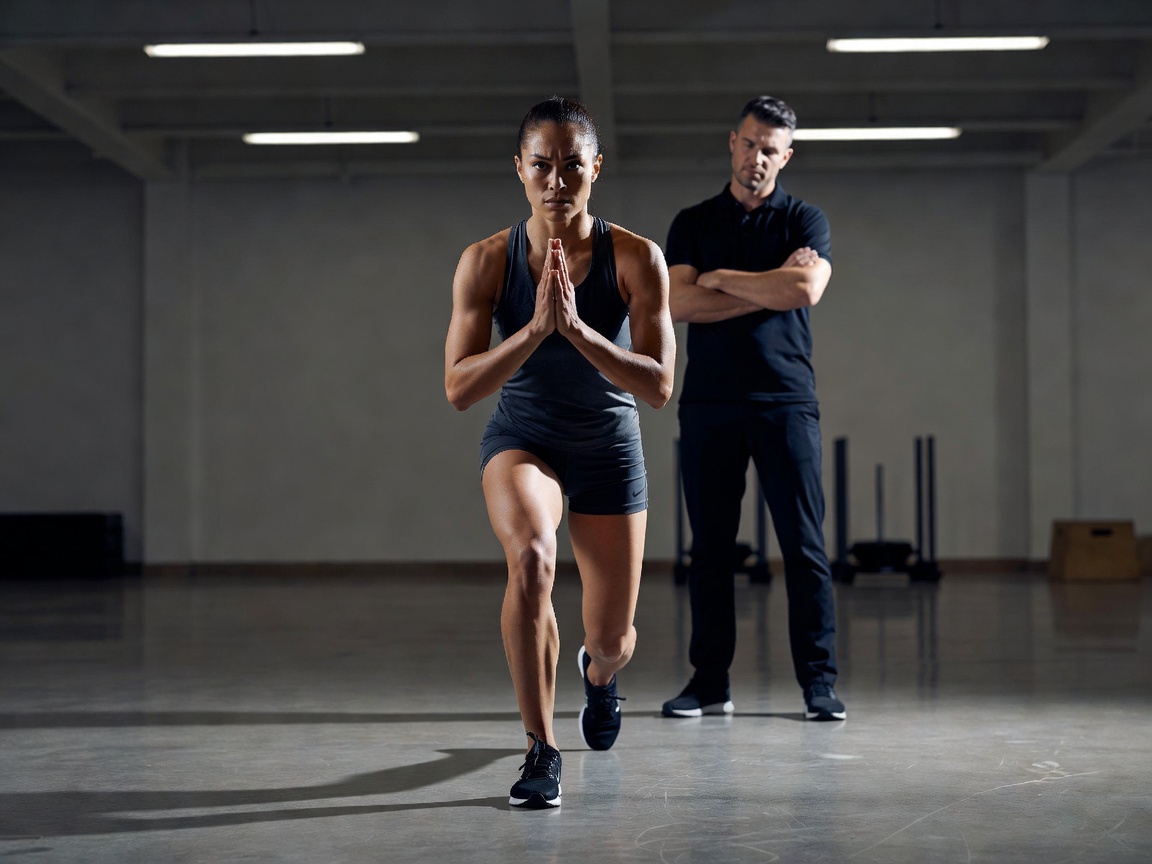
Controlled spaces can reduce distractions, standardize equipment placement and make measurement repeatable. They are useful for studying details that may be difficult to observe during competition. The trade-off is that a lab task can feel different from sport: an athlete may move more cautiously, the surface may be unfamiliar, and decision-making or fatigue may be less representative. Real-world conditions add context, but often make precise measurement harder.
Good interpretation treats lab and field methods as complementary. A controlled test can isolate a feature; observation in sport can show how that feature appears amid real constraints. Neither setting should be asked to answer a question it was not designed to address. And, as ever, a tidy plot does not make a messy question disappear.
Good for
Biomechanics labs can be useful for describing movement patterns, examining force-time behaviour, comparing task conditions under a consistent protocol, and teaching movement-analysis concepts. They can also help teams understand what a particular instrument measures before planning a larger study.
What to know
- Choose equipment to fit the research question, not the other way around.
- Force, movement and physiological response are different kinds of evidence.
- Calibration, repeatability and clear documentation matter.
- Results need context and are not medical diagnoses.
- Educational content is not a substitute for qualified testing or medical advice.